Skip to content
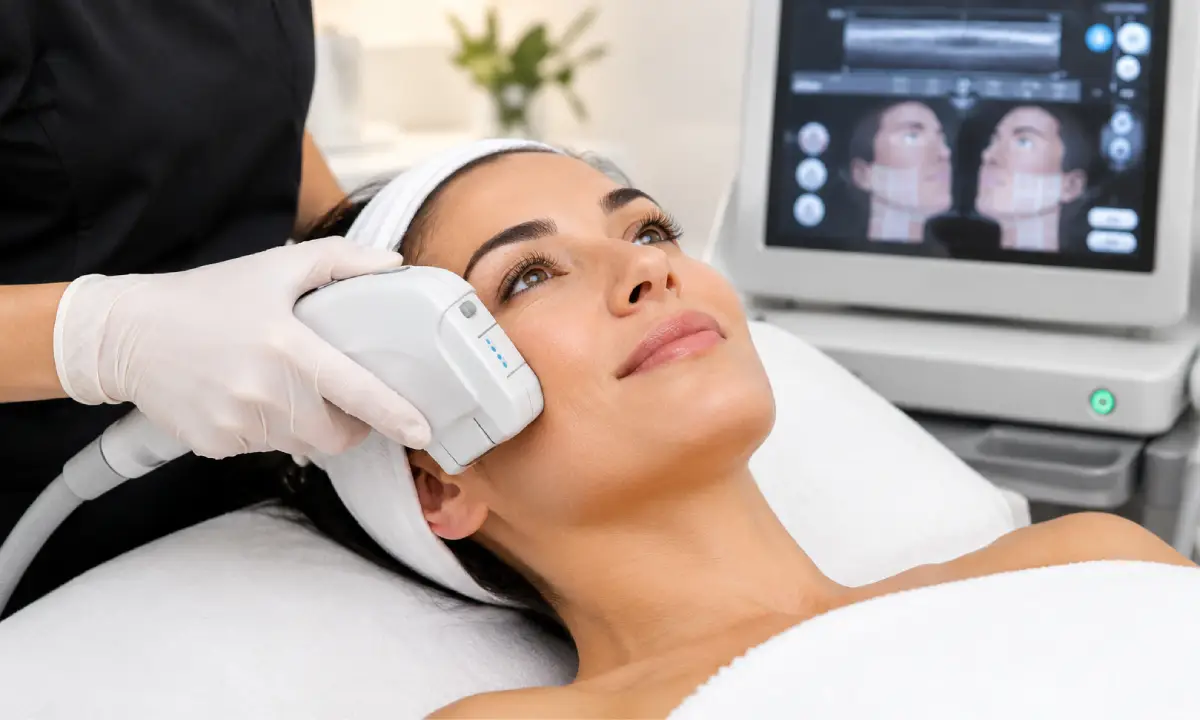
Table of Contents
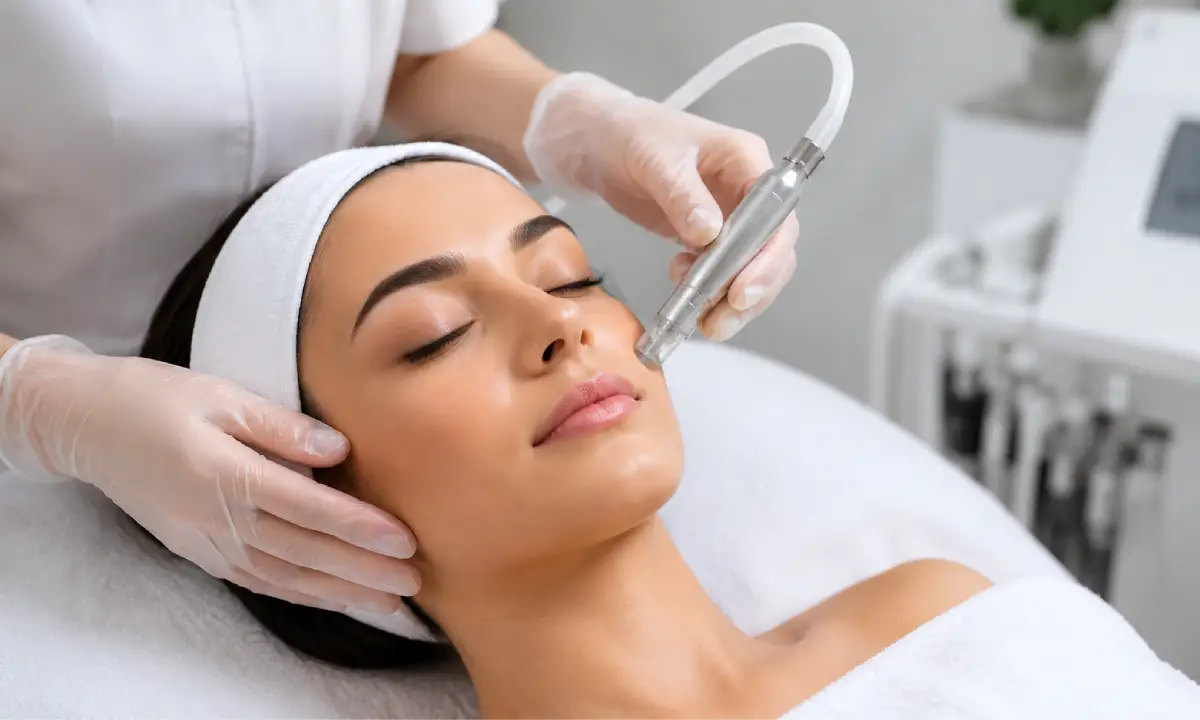
An Ultherapy treatment sends microfocused ultrasound energy to precise depths beneath the skin, where controlled heat prompts the body to rebuild collagen and gradually firm the tissue that supports the face and neck. Nothing is injected, and nothing is cut.
If you have noticed softening along your jawline or heaviness in your brow, you have probably run into a long list of skin tightening treatments that all sound alike. At Khrom Medspa & Wellness, we start with the mechanism, because how a treatment works tells you more than any description of the result. Here is what actually happens during Ultherapy in Brooklyn, NY.
Does Ultherapy Really Build Collagen In My Face?
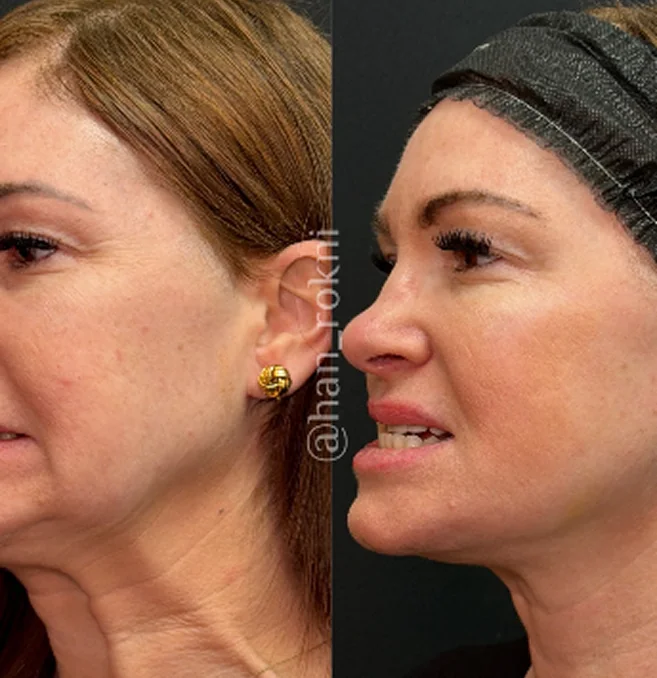
Yes, Ultherapy prompts your body to produce new collagen. The device sends ultrasound energy below the surface, and the controlled warmth sets off a repair response that builds fresh collagen in the weeks afterward, creating firmer support under the skin. Most people notice changes gradually over two or three months, and results vary from person to person.
What Ultherapy® Actually Is
Ultherapy® is an energy-based treatment, which puts it in a different category from injectables and surface resurfacing. Clinically, it’s called microfocused ultrasound with visualization, usually shortened to MFU-V, and it uses the same sound-wave technology found in diagnostic imaging.
The treatment was built for mild to moderate laxity, the softening most people notice along the jawline, under the chin, and in the brow, where deep support has thinned but not disappeared. Because nothing penetrates the surface, Ultherapy® belongs in the non-surgical skin tightening category.
How Ultrasound Reaches Below the Surface
Ultrasound waves pass through the outer layers of skin without heating them, then converge at a set depth, like sunlight through a magnifying glass. The energy stays diffuse as it enters and concentrates only where the provider aims it, which is why an Ultherapy facial treatment reaches deep tissue while the surface stays intact.
Energy is delivered at three depths, roughly 1.5mm, 3.0mm, and 4.5mm. The deepest reaches the SMAS, the layer of connective tissue and muscle that surgeons lift during a facelift. At each focal point, a brief pulse of heat creates a small, controlled area of thermal change while surrounding tissue stays untouched. The treatment bypasses your epidermis, so no surface wound needs to heal.
Why Heating Deep Tissue Produces Lifting
Those points of controlled heat trigger a repair response called neocollagenesis, which simply means new collagen production. Your body reads the thermal signal as something to rebuild around, and over the following weeks it lays down fresh collagen where the energy landed. That scaffold is what firms the skin. The device never physically pulls anything.
Existing collagen contracts slightly from the heat, which is why some patients notice a small early change. The meaningful shift comes later. Most patients see gradual improvement over roughly two to three months, and results vary with age and remaining collagen support. Ultherapy for loose skin is a slow-build treatment by design.
What Real-Time Imaging Adds
Visualization is what separates Ultherapy® from other ultrasound devices. The provider watches the tissue layers on a screen during treatment, with imaging roughly 8 mm deep, so energy lands in collagen-rich layers and avoids bone and blood vessels.
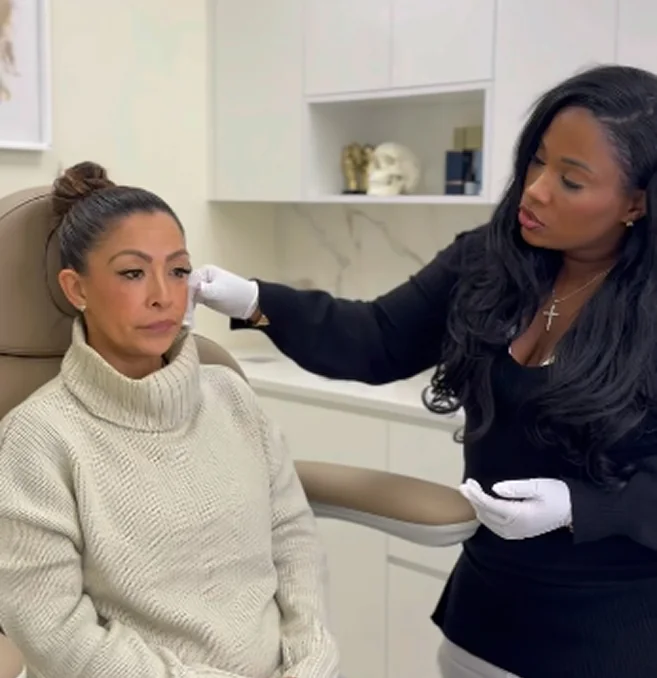
The depth of the SMAS under one patient’s jawline isn’t the same as under another’s, so seeing the layers makes depth selection a judgment made in the moment. At Khrom Medspa & Wellness, we set treatment areas, depths, and energy levels after a skin assessment, which is also how we decide whether Ultherapy skin tightening is right for you.
Where Ultherapy® Is Cleared to Treat
Ultherapy® is FDA cleared, not FDA approved, and that clearance covers specific named areas. Each responds for the same reason: collagen support has thinned in the deeper layers, where the energy goes.
Lifting the Brow
Brow heaviness was the first cleared indication for this technology and a common reason patients ask about it. When the brow descends even slightly, the eyes read as tired while the skin above looks unchanged.
The Submental Area and Neck
Ultherapy® is cleared for lifting lax tissue under the chin and along the neck. Skin is thinner here, and deep support gives way earlier. Depth of delivery is why this area often responds when surface-level treatments have not.
Lines and Wrinkles on the Décolleté
The chest is cleared specifically for improving lines and wrinkles. Sun exposure accumulates there, and the area carries little underlying structure, so Ultherapy for wrinkles works on tissue that had less support to begin with. Your provider confirms available areas at consultation.
What “Non-Surgical” Means in Practice
No incisions, no needles, no tissue removed. There is nothing to recover from in the surgical sense, and most patients return to their usual routine the same day. Patients typically notice warmth, tingling, or brief pressure during treatment, with mild redness or tenderness afterward that settles quickly.
The ceiling is worth stating plainly. A surgical lift removes and repositions tissue, while a non-invasive wrinkle treatment like this one asks existing tissue to rebuild itself, so the degree of change differs. Ultherapy facial rejuvenation suits mild to moderate laxity better than advanced sagging, and our team is happy to talk through your options first.
Common Questions About How Ultherapy® Works
Does the ultrasound damage the skin it passes through?
No. The energy concentrates only at the focal depth, which leaves the epidermis and the layers just below it unaffected.
Why can’t I see results right away?
The firming comes from collagen your body builds. It forms over weeks, and most patients notice the clearest difference around the two- to three-month mark.
Is it safe for deeper skin tones?
Ultrasound energy bypasses the melanin-rich outer layer of skin, which is why it carries a strong safety record across Fitzpatrick skin types III to VI.
How is this different from radiofrequency or microneedling?
Depth and mechanism. Radiofrequency heats tissue through its resistance to an electrical current, microneedling works through controlled surface injury, and microfocused ultrasound places energy at chosen depths without disturbing the layers above.
Firmer Skin Starts With Understanding the How
Knowing what happens under the skin makes the decision easier and clarifies which Ultherapy treatment benefits apply to you. A cream can’t reach deep collagen support, and you can’t judge it in the mirror.
That is what a consultation is for. Our providers look at your skin structure, explain what the ultrasound can realistically reach, and tell you whether Ultherapy, as we perform it in Brooklyn, is the right tool, or whether something else in our range would serve you better. Schedule an Ultherapy consultation today to find out if this non-surgical skin-tightening treatment is right for you.